The MOBY Net CAS from Instrument Systems (M/N CAS140CT-156, S/N 664014214) was not ordered with a fiber optic or collector head; we deferred this decision to now. The CAS’ are configured with a slotted port and locking ring at the entrance slit. The Instrument Systems part “PLG-xxx” fits there. It has a lens for focusing the fiber output onto the entrance slit. The different versions of the PLG refer to the fiber connector type (SMA or Instrument System’s “fiber bundle ferrule”) and wavelength range. The MOBY Net CAS came with a PLG-320, which is SMA optimized for UV (190 nm to 3200 nm).
Image 1291 is a photograph of the CAS port without a PLG in place. You can see the slot key meant to provide kinematic adjustment.
Image 1287 is a photograph of a NIST CAS with a SMA fiber connected to the PLG.
Image 1485 is a photograph of a PLG-420 (UV, fiber bundle) that shows the pin that fits in the slot on the CAS side.
After discussing with Ken, we decided to order two foreoptic systems for the MOBY Net CAS:
#1 = PLG-420/OFG-424 terminated with a fiber ferrule (for radiance with Gershun tube, and coupling to the SQM plate)
#2 = PLG-420/OFG-424/EOP-146 (for irradiance for long term stability tests with FEL lamps, comparing to Howard and John’s set up).
For description of these parts, see
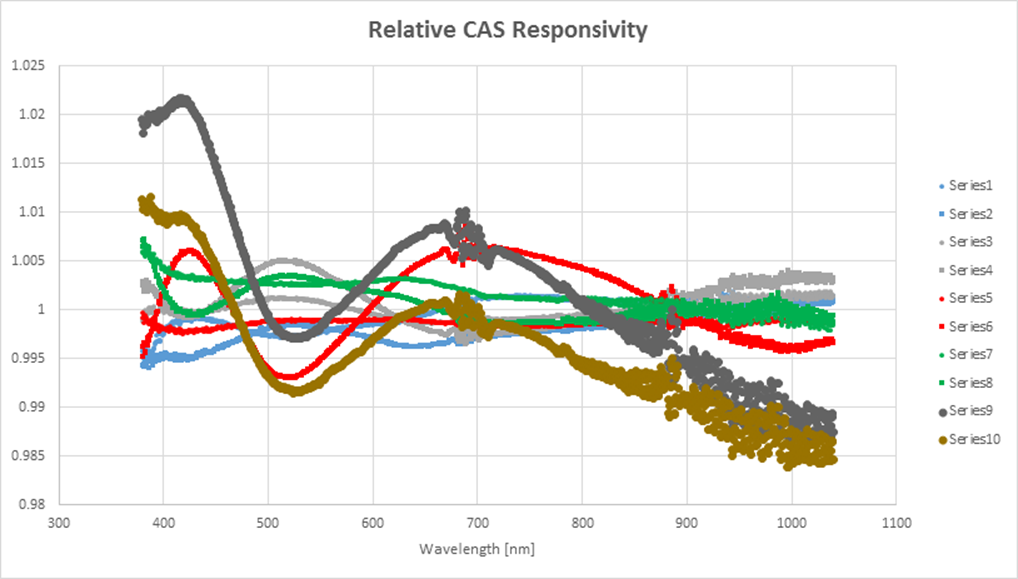
As we were researching which combination would be best for MOBY Net, John Woodward, Ping-Shine Shaw, Keith Lykke, Steve Brown, and Howard Yoon were facing instability issues in the CAS they have been using for field trips. Their CAS has a fiber bundle PLG and the Instrument Systems EOP-146 irradiance head. They never disconnect the head; for shipping or even daily use they disconnect the fiber foreoptic at the PLG/CAS port. Howard would routinely (over several years) measure the irradiance responsivity using FELs, and for a while things looked really stable and they then turned south, see Fig 1. After some more testing with more FELs, and repeats w/o disconnecting the PLG and with disconnecting it, they discovered the problem is slop in the so-called kinematic mount.
So now, based on the NIST CAS tests, we would first look at the PLG in/out repeatability. It is possible this issue becomes worse as the parts wear. Solutions include: a) use radiance foreoptic only and build shipping container so system does not have to be detached; b) figure out how to improve CAS kinematic design; c) …
Figure 1. Repeat tests of a NIST CAS with FEL lamps.
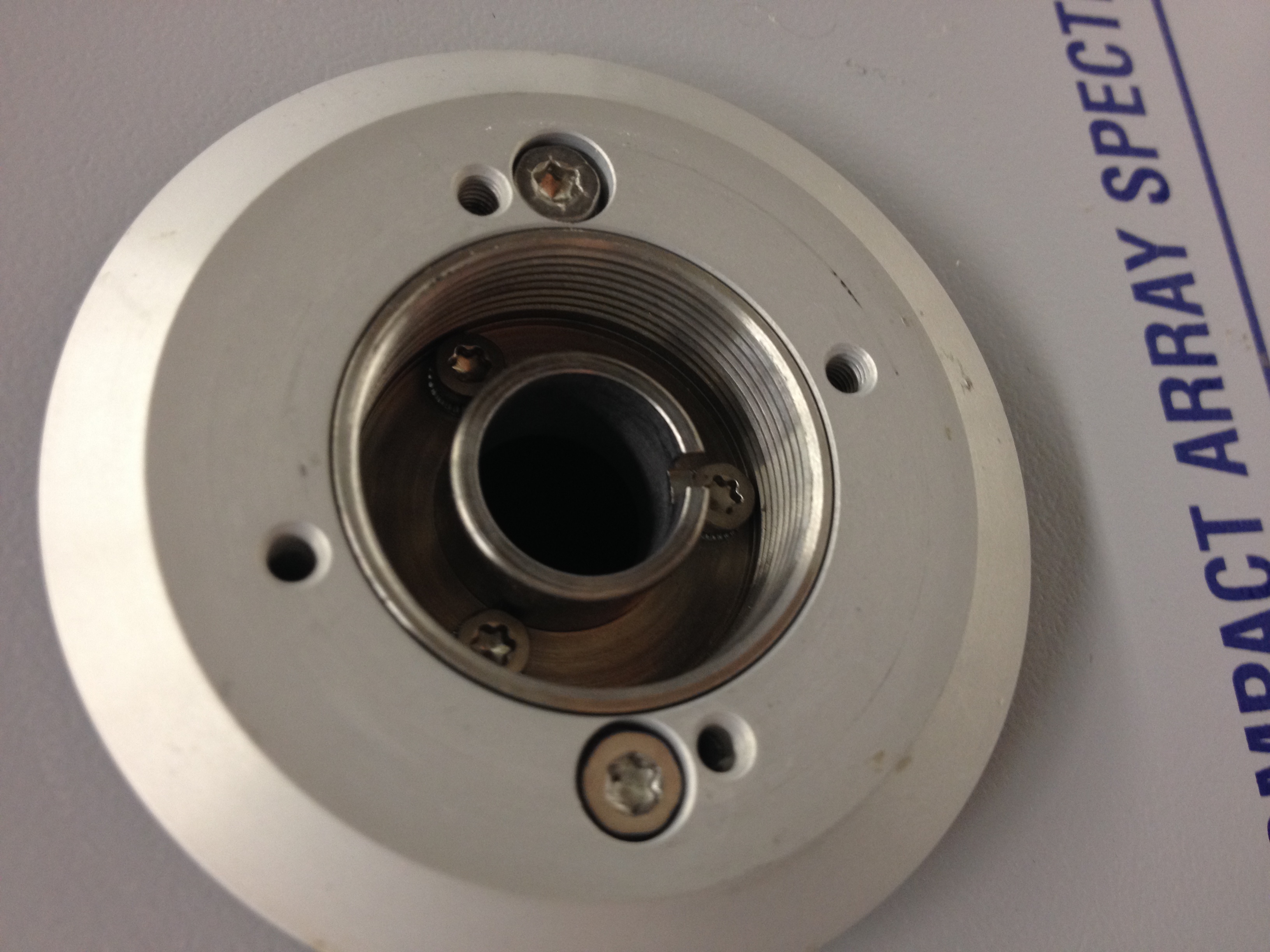 |
Image 1291 is a photograph of the CAS port without a PLG in place. You can see the slot key meant to provide kinematic adjustment. |
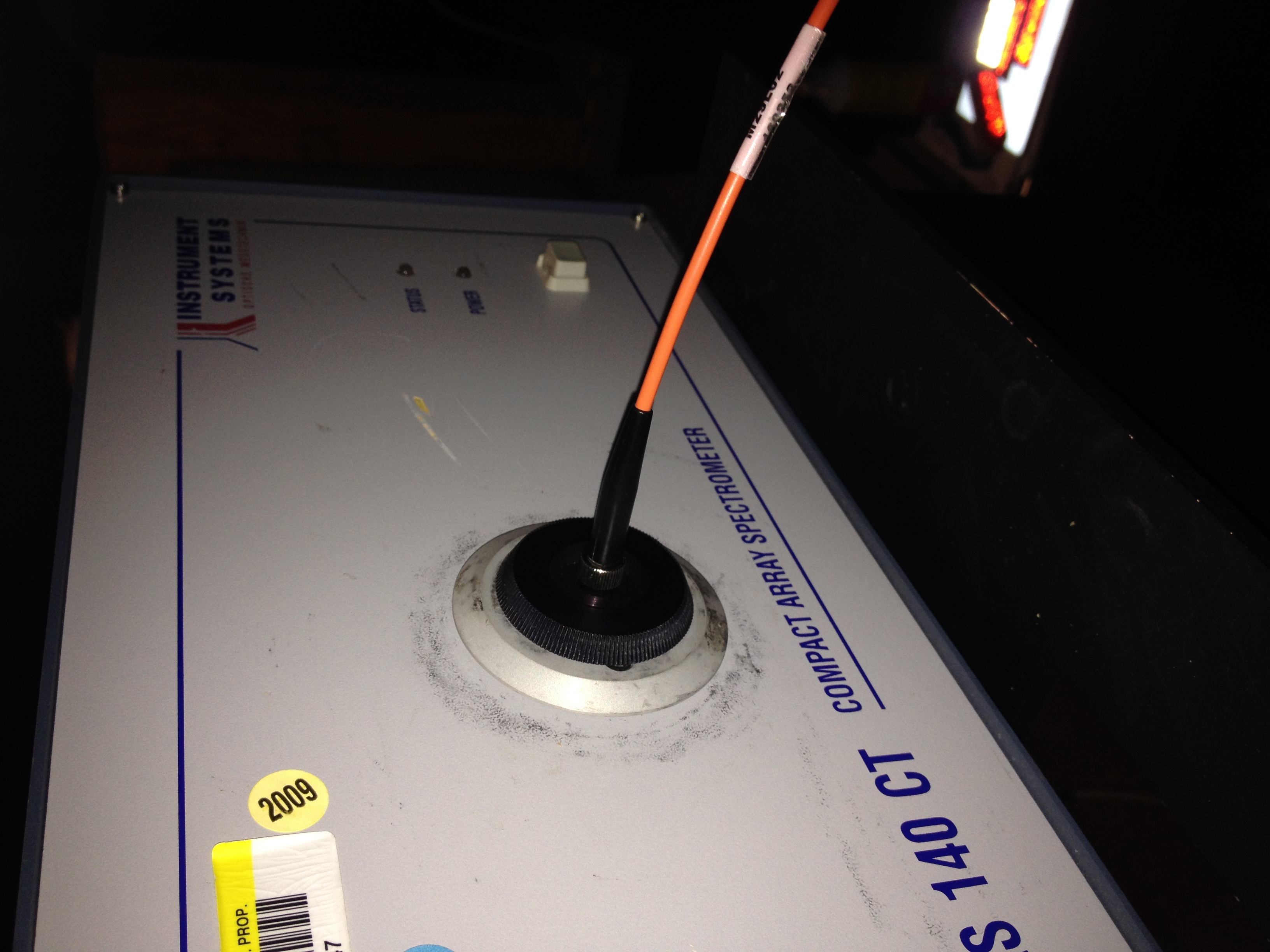 |
| Image 1287 is a photograph of a NIST CAS with a SMA fiber connected to the PLG. |
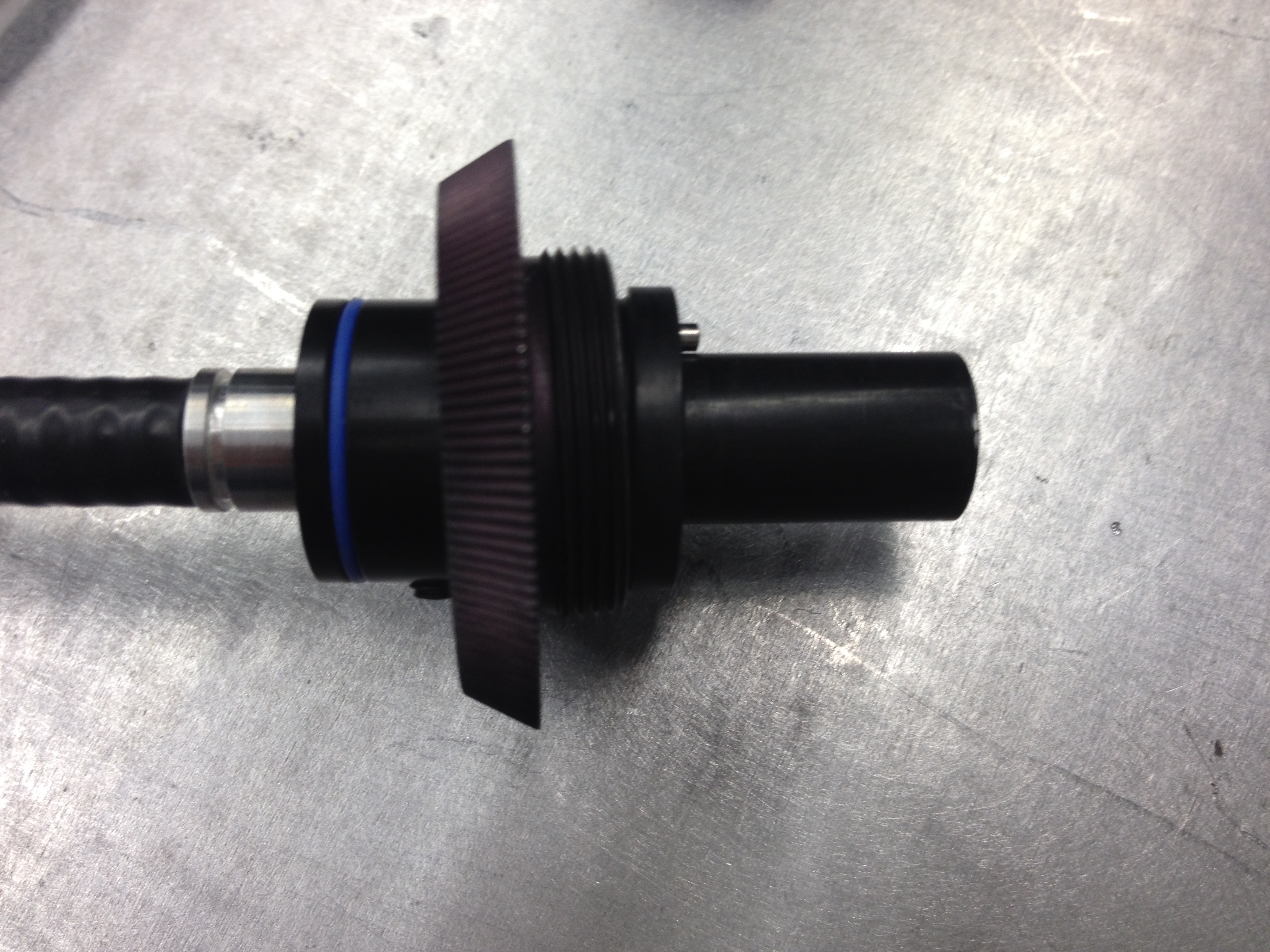 |
| Image 1485 is a photograph of a PLG-420 (UV, fiber bundle) that shows the pin that fits in the slot on the CAS side. |